AI and the Illusion of Competence: Deliciously Easy Until You Realize AI "Knows" the Answers But You Don't
Updated: May 27
Sometimes when a task feels easier, we assume we are improving. That is only true if you earned the ease.
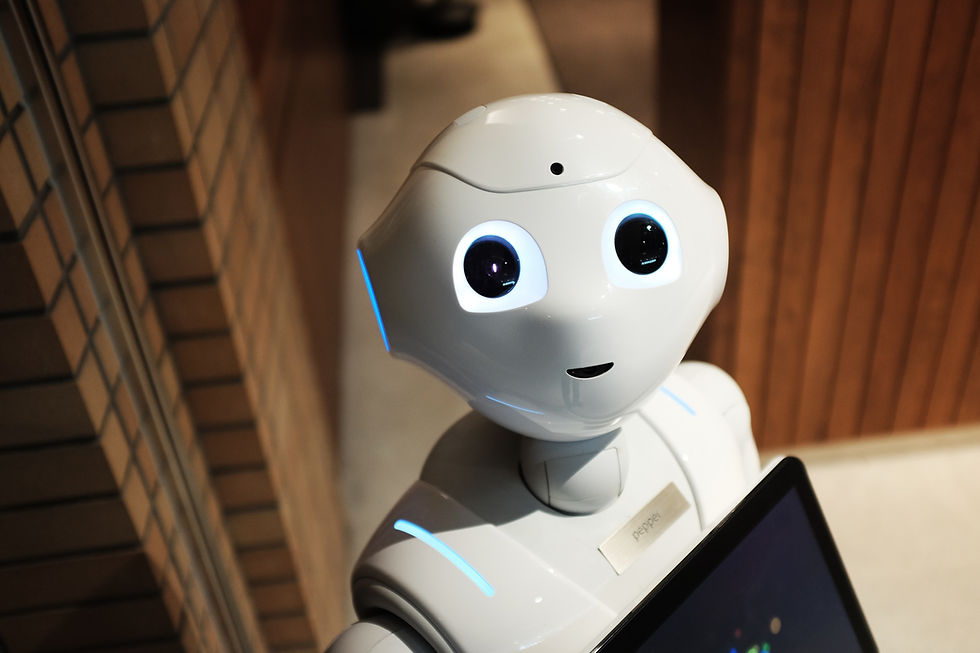
Photo by Alex Knight on Unsplash
Let me paint a picture that might feel familiar. You're reading over your notes, or a textbook, or maybe an AI-generated explanation. And you're thinking: "Oh yeah, that makes sense. I get this. Why did this ever seem confusing?" You feel fluent. Efficient. Maybe a little smug.
And then you try to do it on your own. And suddenly: wait, what was that step again? Why is this so much harder than it looked?
The Illusion of Competence (I've got this. I totally know this. Wait... Do I know this?)
That uncomfortable gap has a name. Psychologists call it the illusion of competence: when things feel clearer in the moment than they actually are in your brain. You can recognize the right answer. You can follow the explanation and nod along convincingly. But generating the answer yourself? That is an entirely different skill, and it only develops when you do the struggling yourself.
AI can make this illusion stronger. You can generate an outline in seconds, polish a paragraph almost instantly, and get a clean well-structured answer with very little effort. And it can feel like real progress. You feel faster, more organized, more capable. But there is a subtle issue underneath all of that: did your brain do the work, or did it just watch the work happen?
Products (like a paper, an assignment, a problem set, a report) are typically the measure of learning. With AI, you can produce these outputs almost instantaneously and it may feel like you get it, like they are, more or less, your products.
Unless they absolutely aren't. We probably all know students who have knowingly and intentionally used AI to cheat. That's another topic for another day. For now, if you feel like you are one of the few people actually slugging it out doing the real work while others coast on their AI-generated assignments, let me assure you that your effort will bring rewards in the future.
Learning takes longer to reveal itself. So in that AI-induced-euphoria moment, everything feels like it is going great - until you sit down for an exam, or try to explain the concept to someone else, or have to do it without help.
Shattering the Illusion of Competence (Practice walking the tightrope without your AI net)
If you had to do this on your own, without AI, could you? If the answer is "not really" or "I'm not sure," that is useful information. It tells you exactly what you still need to learn. And here is the part students don't always love hearing: the feeling of struggle is often the feeling of learning. It is slower. Less comfortable. Occasionally (OK, let's be real here, frequently) annoying. But it is also what builds understanding that lasts.
I'm not saying AI is always the bad guy, like the drug dealer waiting on the corner, trying to get you hooked on something that is inherently bad for you. But sometimes it is. Other times it can be like your smart friend, who is pushing you to learn and understand something for yourself. But you have to know how to prompt it to provide that and have enough knowledge and self-awareness to realize when it is sliding into drug dealer mode.
So the next time something feels deliciously easy, pause for a moment. Ask yourself: did I get better, or did this just get suspiciously easy? The difference is easy to miss. But it matters more than it seems. Real learning is quieter, slower, frequently frustrating, and sticks around a lot longer.

Comments